Cast Iron vs. PVC Pipes
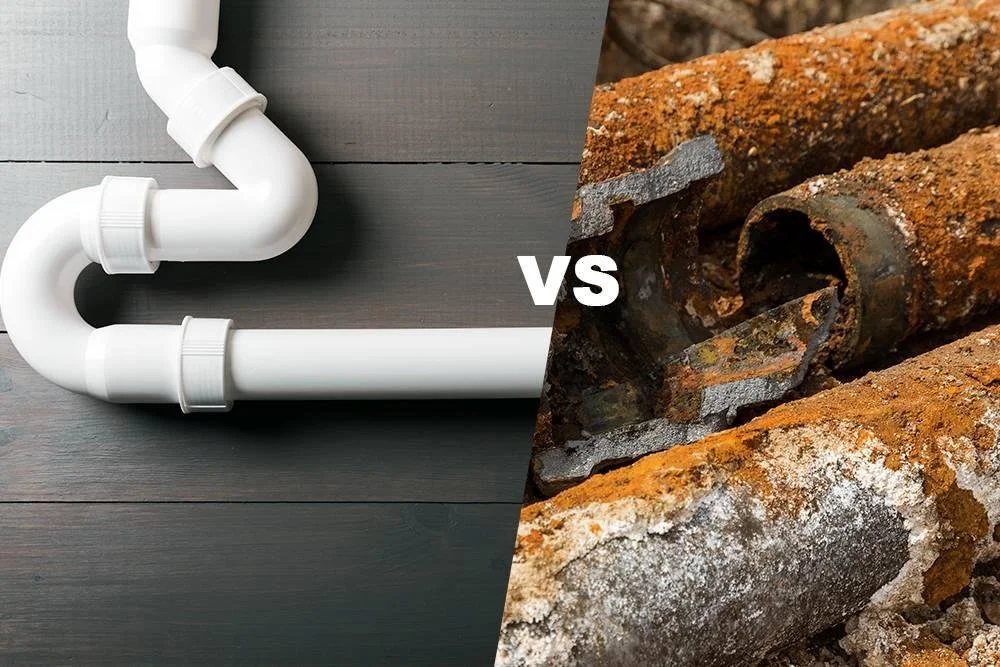
Cast Iron vs. PVC Pipes: What Homeowners Should Know Before Selling
-Written by Courtney and Edward Slater
If you own an older home, there is a good chance some—or even all—of your home's original drain and sewer plumbing is made from cast iron.
For decades, cast iron was a common choice for residential plumbing because it is strong, durable and relatively quiet. Today, PVC has become a popular alternative, particularly for drain, waste and vent systems.
So, if you discover that your home still has cast iron pipes, should you replace them with PVC before putting your home on the market?
Not necessarily.
The presence of cast iron plumbing does not automatically mean there is a problem. What matters most is the condition and performance of the system.
Why Are Cast Iron Pipes Found in Older Homes?
Cast iron was widely used in residential plumbing for generations. It is a heavy, durable material that can provide many years of service. It is also known for reducing the sound associated with water traveling through drain pipes.
In fact, cast iron and PVC are both recognized materials for residential drainage and vent systems under the International Residential Code.
The concern with older cast iron isn't simply that it is old. Over time, cast iron can experience corrosion, deterioration, cracking or other forms of damage. Corrosion can eventually reduce the pipe's wall thickness and compromise its structural integrity.
That is why the condition of the plumbing is much more important than simply knowing what material was used.
Cast Iron vs. PVC: What's the Difference?
Both materials can be used for residential drainage systems, but they have different characteristics.
Cast Iron
Benefits include:
Strong and durable
Naturally quieter than many plastic plumbing systems
Noncombustible
Can provide a long service life when properly maintained
Historically proven in residential and commercial plumbing systems
Potential concerns include:
Susceptibility to corrosion over time
Can become brittle as it ages
Corrosion may occur inside the pipe even when the exterior doesn't appear severely damaged
Repairs and replacement can be more labor-intensive
Deterioration can eventually lead to leaks, blockages or structural failure
The EPA identifies corrosion as a primary failure mechanism for cast iron piping and notes that cast iron can be particularly susceptible to cracking because of its brittleness.
PVC
PVC has become a common choice for modern drainage systems because it is lightweight, relatively easy to install and resistant to many forms of corrosion. Its smooth interior also provides good flow characteristics.
Benefits of PVC include:
Resistant to corrosion
Lightweight
Easier to handle and install
Smooth interior surface
Generally less susceptible to the corrosion problems associated with cast iron
Often easier and less expensive to repair or replace
PVC isn't completely maintenance-free, however. Like any plumbing material, its performance depends on proper installation, surrounding conditions and the condition of the entire drainage system.
Is Cast Iron Plumbing a Problem When Selling a Home?
Not automatically.
This is an important distinction for homeowners.
A home with functioning cast iron plumbing isn't necessarily a home with defective plumbing. If the system is operating properly and an inspection does not identify significant deterioration, there may be no reason to replace the entire system simply because it is made of cast iron.
The International Residential Code continues to recognize cast iron as an acceptable material for both above-ground and underground residential drainage and vent piping.
However, buyers may have concerns about older cast iron—particularly if the inspection identifies corrosion, deterioration, leaks, poor drainage or other issues.
And that is where things can become more complicated during a real estate transaction.
Why Cast Iron Often Comes Up During a Home Inspection
A general home inspection may identify the presence of cast iron and recommend further evaluation depending on its visible condition.
For underground drain lines, a sewer scope can provide additional information that cannot be obtained simply by looking at the exposed plumbing.
A sewer camera can help identify issues such as:
Cracks or breaks
Corrosion or deterioration
Blockages
Root intrusion
Offsets or separated joints
Bellies or low spots
Other conditions affecting the line
This additional information can be particularly valuable when selling an older home because it gives both the seller and buyer a better understanding of the condition of the plumbing.
This is one reason a pre-inspection can be so valuable when selling an older home. Rather than waiting for a buyer to uncover potential concerns during their inspection, sellers can identify issues ahead of time and decide how they want to address them. Read more about why a pre-inspection can help sell your home for more.
Should You Replace Cast Iron With PVC Before Selling?
This is where there is no one-size-fits-all answer.
If your cast iron plumbing is functioning properly and a qualified professional finds it to be in good condition, proactively replacing it may not make financial sense.
On the other hand, if an inspection or sewer scope reveals significant deterioration, addressing the problem before listing may be worth considering.
There are several advantages to completing the work before putting the home on the market:
1. It Can Reduce a Buyer's Concern
Older plumbing can become a point of uncertainty during negotiations. Addressing a known issue before listing can make the condition of the home easier to explain.
2. It Can Help Avoid a Surprise During the Option Period
When buyers discover significant plumbing concerns after going under contract, it can lead to additional negotiations, repair requests or delays.
Taking care of known issues beforehand gives the seller more control over how the work is handled.
3. You Can Document the Improvement
If cast iron is replaced with PVC, keep the invoices, permits and documentation from the licensed plumber. Those records can help demonstrate what was replaced and when the work was completed.
4. It May Give Buyers Greater Confidence
A buyer may feel more comfortable knowing that a significant plumbing component has recently been addressed rather than wondering how much useful life remains.
But Don't Replace It Just Because It's Cast Iron
This may be the most important takeaway.
Cast iron is not automatically defective simply because it is old.
If your plumbing is functioning properly and a qualified professional determines that it is in satisfactory condition, replacement is not necessarily required simply because PVC is newer.
The right question isn't:
“Do I have cast iron?”
It's:
“What condition is my cast iron plumbing in?”
That distinction can save homeowners from spending thousands of dollars on work that may not be necessary—or, conversely, help them identify a problem before it becomes a much larger issue.
Thinking About Selling an Older Home?
If you are preparing to sell a home with older plumbing, it is worth addressing potential concerns before putting the home on the market. A pre-inspection can be one useful tool for identifying potential issues early and giving sellers more time to make informed decisions.
Wondering what else you should consider before listing? Read our guide: Eliminating the Element of Surprise: Why a Pre-Inspection Can Help Sell Your Home for More.
At Slater Real Estate Group, we believe preparation is one of the most important parts of a successful home sale. From staging and repairs to understanding what buyers and inspectors may notice, we help sellers identify potential issues and determine which improvements are worth addressing before listing.
Sometimes the best strategy is to replace an aging system. Sometimes it is to leave a functioning system alone and provide appropriate documentation. The right decision depends on the condition of the plumbing, the home's overall situation and the recommendations of qualified professionals.
If you're wondering whether your home's cast iron plumbing could become an issue when you sell, we'd be happy to help you determine what should be evaluated before your home goes on the market.
A little preparation can go a long way toward eliminating surprises later.